
Description
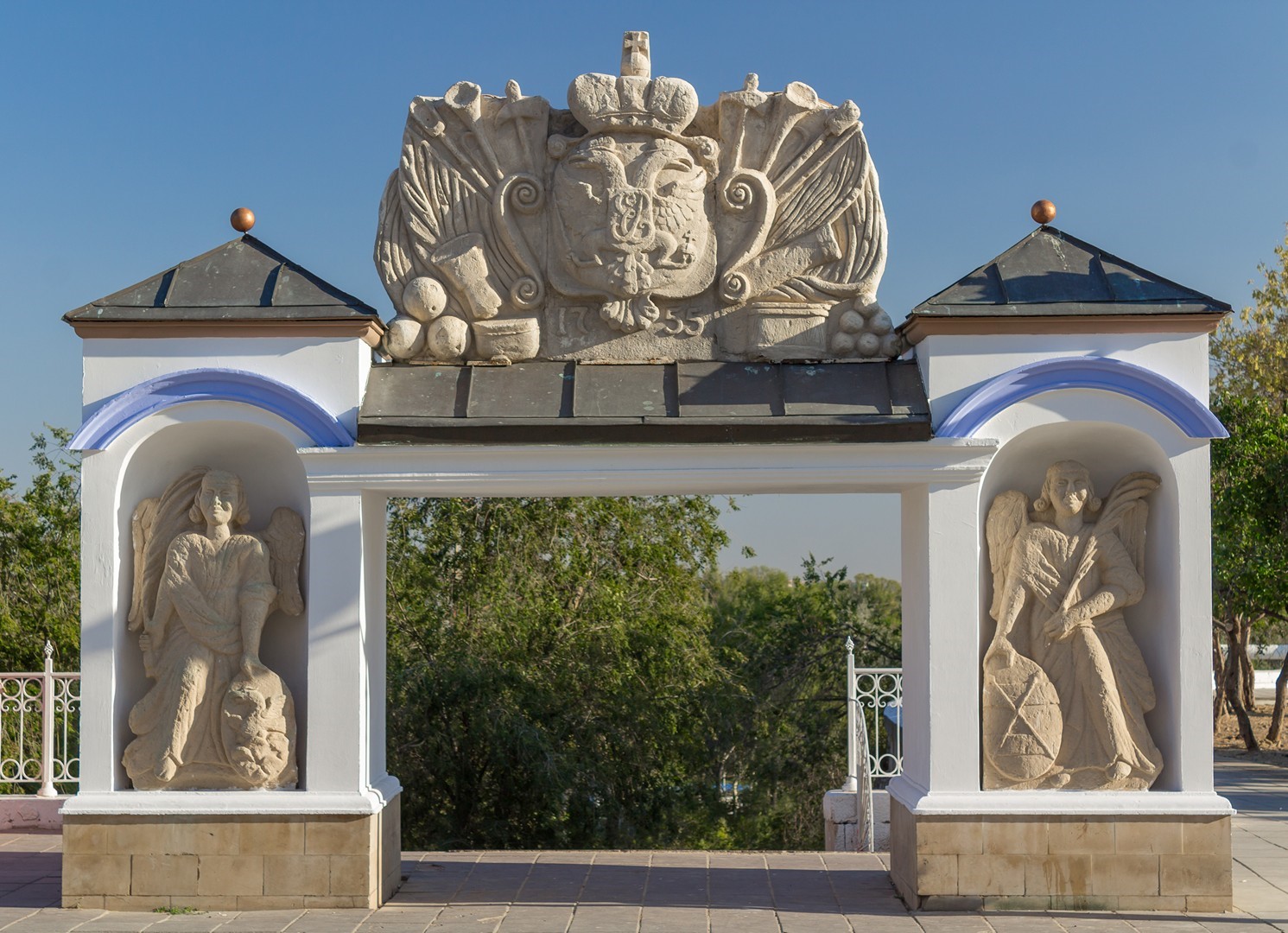
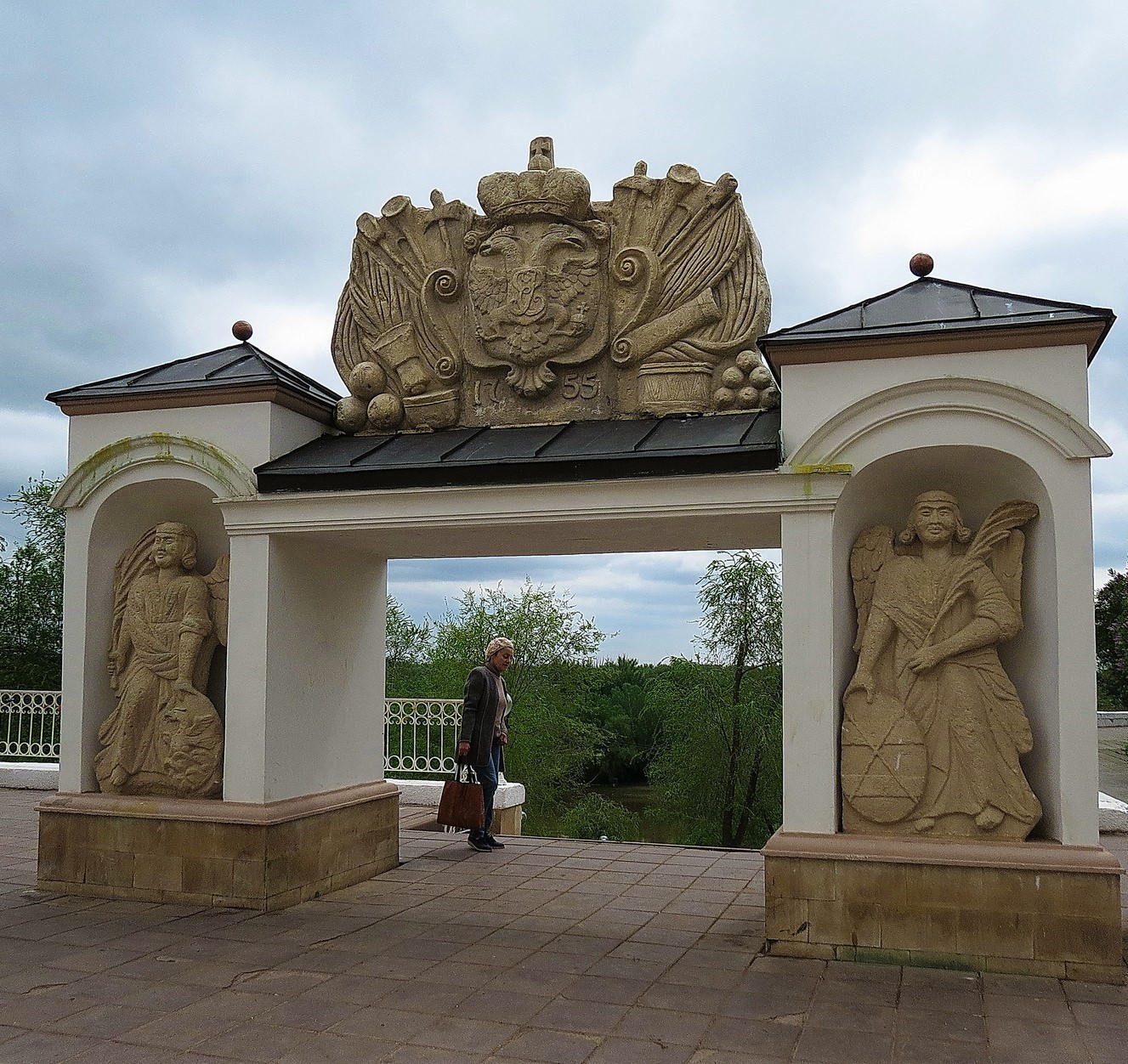
In 1755, Orenburg governor I.I. Neplyuev sent his son to St. Petersburg with a report on the cessation of the Bashkir rebellion in the region. After listening to the report, Empress Elizabeth Petrovna wished that a stone gate facing the Kirghiz-Kaisatsky steppe should be built in Orenburg as the highest gift to the city. These gates, called Elizabethan gates, were installed on the ramparts on Vodaya Street (now Maxim Gorky Street), which is why they received their second name - Vodyanye. They faced the steppe and symbolized the entrance from Europe to Asia. This is how P.D. Raysky describes these gates in his guide to Orenburg.: "These gates are stone, six yards wide, three and a half high, built of brick and plastered, the crossbar above the gate is wooden, above the gate on the crossbar, between the small four-pitched roofs above the pillars, a flat white stone is fixed with an edge, on which are carved reinforcing images consisting of banners, guns, axes, cannonballs, drums, warning horns, rear parts of guns that surround the national emblem. In the middle of the coat of arms, the initials "I. R. E." are intertwined from below and the year 1755 is below them. The initials mean: Empress Elizabeth of Russia. In addition to these ornaments, two angels holding a shield, a spear and a palm branch are placed in the recesses of the pillars on the front side. The angels are carved from white stone and look more like stone women (such is the former art of sculptors) found in the steppe than angels."
Initially, the gate had a gate and was locked. After 1917, they were abandoned and gradually destroyed. The original fragments of the gate are kept in the Museum of the History of Orenburg.
By the 265th anniversary of Orenburg, the monument was recreated according to the available historical sketches in its former place. It was even planned to install preserved figures of angels and a sandstone coat of arms in the new model, but they decided to abandon this idea and save the artifacts from further destruction in the museum collection.
Text and photo from the book "In memoriam… Monuments of Orenburg" / I.V. Khramov. Orenburg: Orenburg Book Publishing House named after G.P. Donkovtsev, 2023
Read completely