


Description
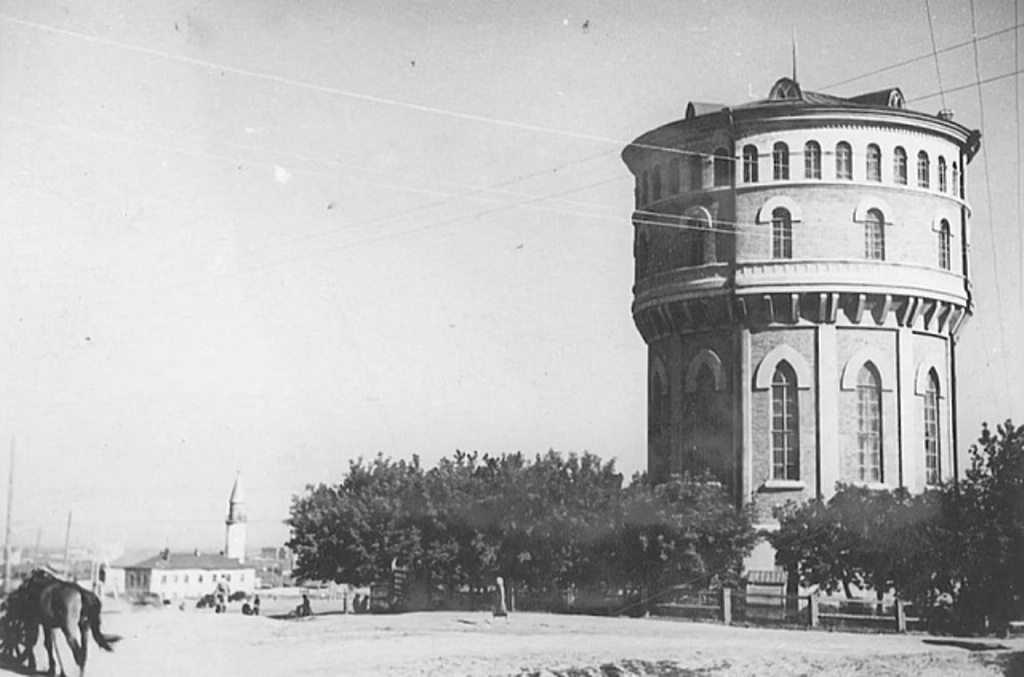
For a long time there was a wasteland in this place. Since about the 1870s, the city began to grow rapidly, and new houses and buildings began to appear on this territory. A number of cemeteries stretched from the southwest to the southeast, and a convent was located here, and rapid construction of one-story houses began on the western side. With such a rapid settlement, the deserted space soon turned into a square. It was on this square in 1904 that a building for purifying water for the townspeople appeared, containing about 80 buckets. After the end of the Civil War, Orenburg began to grow rapidly due to refugees. And the newly arrived Soviet government took significant steps related to landscaping and construction in the city. There was a need to establish centralized water supply for new and old districts. And in 1927, the city executive committee decided that a water tower should be built in Orenburg.
The new tower, which was 28 meters high, took the place of one of the most beautiful sights of the city. Its construction was one of the first steps towards industrialization and economic development. The architect of the tower was I.V. Ryangin, who chose the classical style for construction with high lancet windows at the bottom of the tower and a beautiful combination of red brick with red-brown plaster decorative elements. Cemeteries located near the tower became inactive, and until 1939, a dilapidated brick mill was located behind the tower.
In the sixties, the water tower was no longer used for its intended purpose due to the construction of five-storey residential buildings on new Pobedy Avenue. Currently, the tower has a cafe, bar and office space.
Read completely