

Description
Due to the fact that the former two cathedral churches — Preobrazhensky and Vvedensky — no longer met the needs of the sprawling city, Governor-General of Orenburg Kryzhanovsky in the early 1870s put forward the idea of building a new cathedral church and began an all-Russian fundraiser and donations. The initial projects of Leonov and Schroeter, members of the Imperial Academy of Arts, were expensive and did not suit the Orenburg committee. A few years later, a less expensive project was developed by Alexander Yashchenko, an academician of architecture, who also became the author of the Ascension Cathedral in Novocherkassk. In 1888, construction work began, which lasted until 1894 under the direction of the city architect D. P. Korin. Since the money in the budget has run out, the merchant Maria Lvovna Ivanova donated an additional 30 thousand rubles for the installation of the iconostasis, the painting of icons and the casting of bells. The bells were cast by a Moscow craftsman who worked on the bells for the Cathedral of Christ the Savior. The main bell weighed about 11.6 tons.
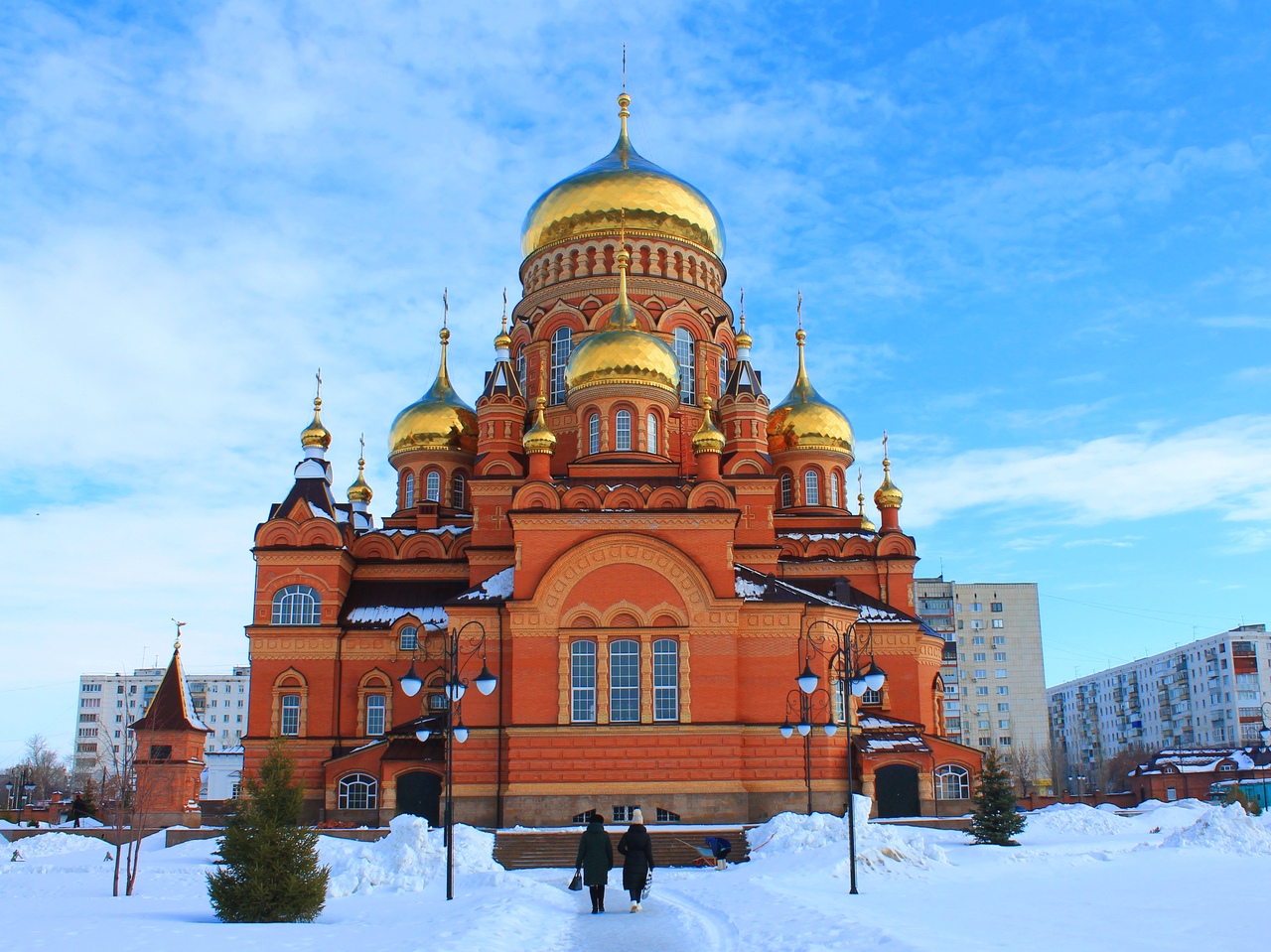
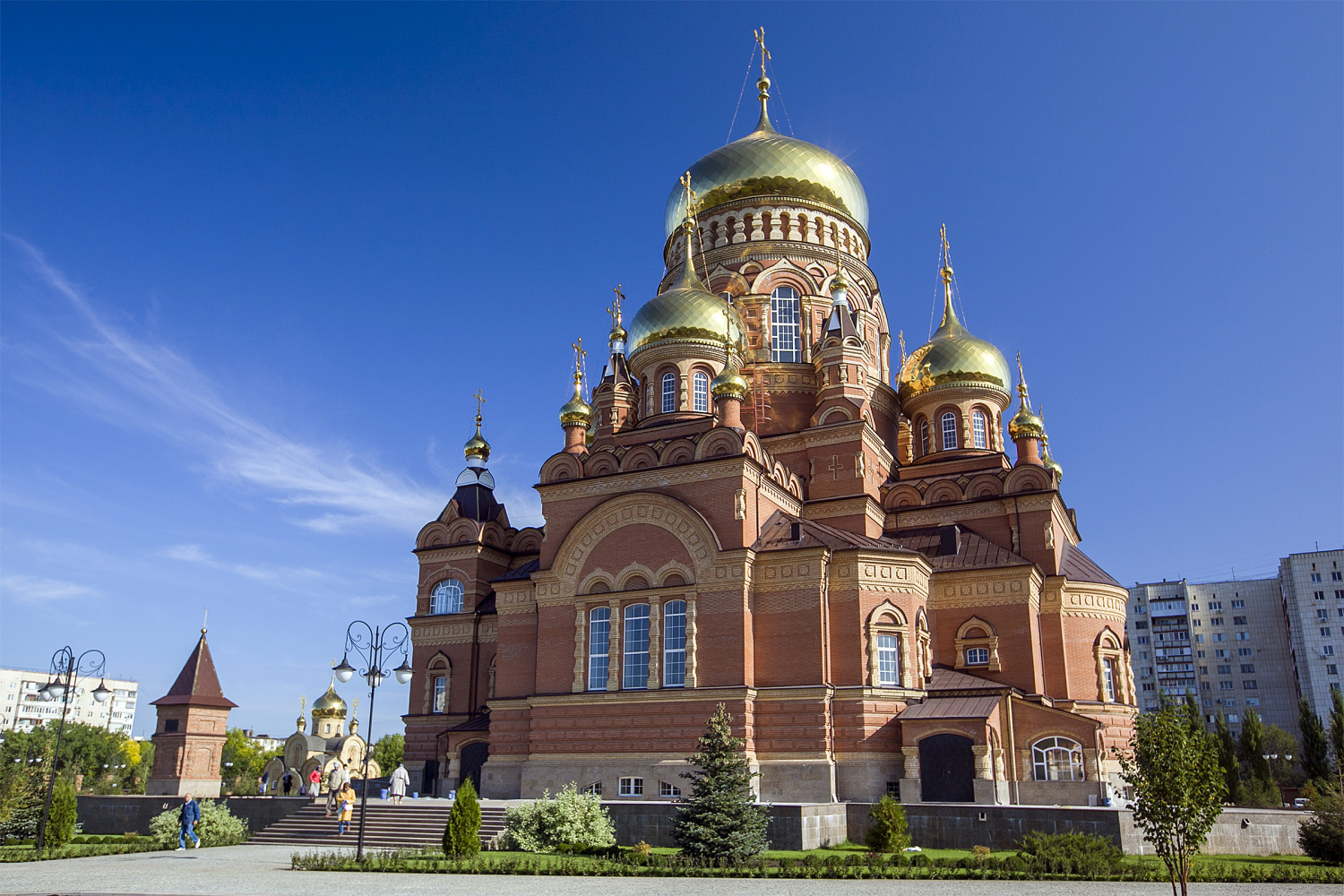
General view of the Kazan Cathedral
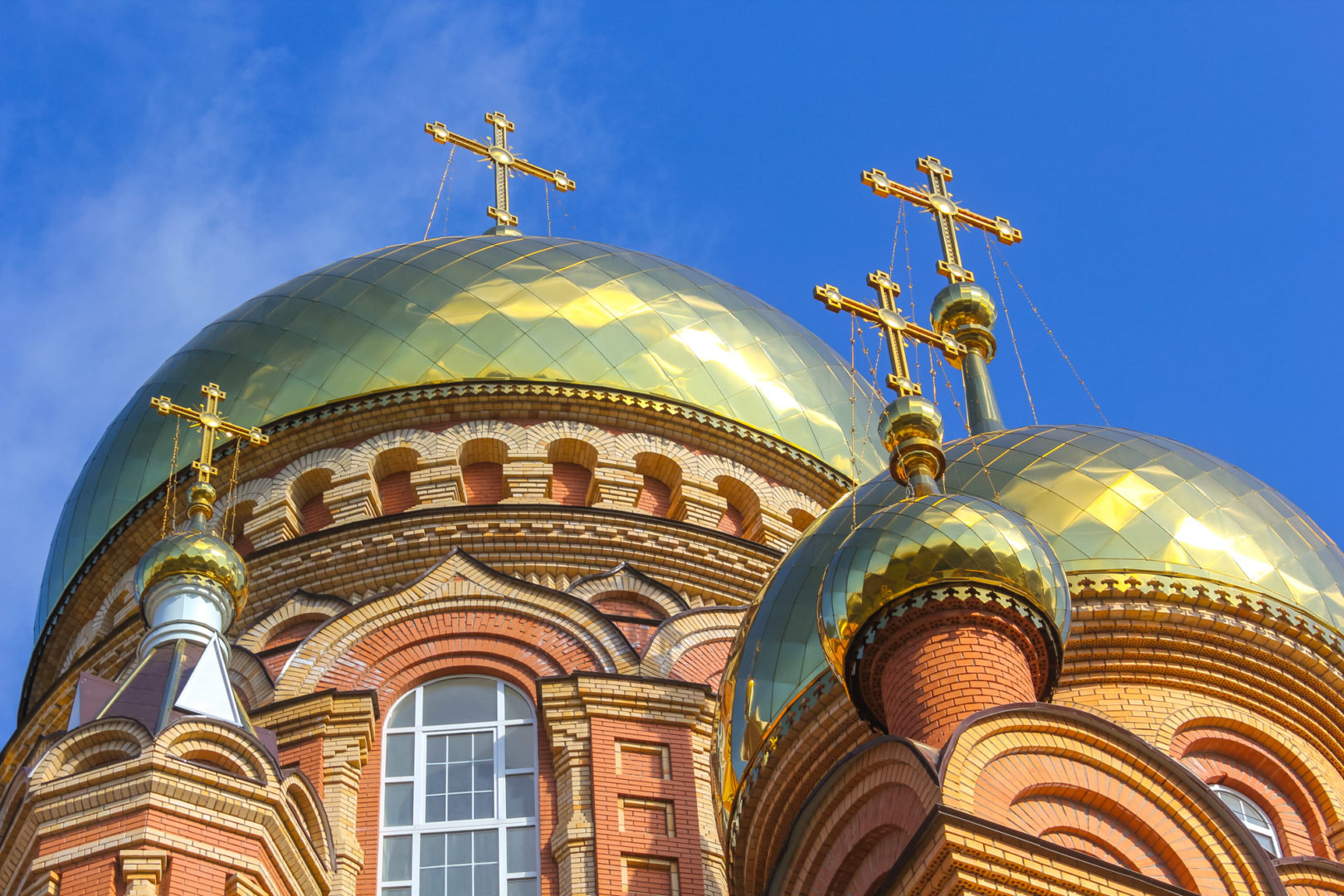
The temple was built in the neo-Byzantine style with an extensive dome prominent in the middle, which was surrounded on three sides by three semi-domes, and four bell towers rose beautifully between them. Inside, the cathedral was artistically decorated with paintings and ornaments. In addition to the main altar, two side chapels were built in the cathedral: in the name of St. Nicholas the Wonderworker of Myra and St. Sergius of Radonezh. In the cathedral there was an exact copy of the icon of the Kazan Mother of God, revered as miraculous. The main iconostasis featured icons by the artist Vladimir Makovsky, and on one of the pilasters was placed his large painting "The Apparition of the Mother of God to St. Sergius."
Memorial sign at the Cathedral site
In 1891, after returning from a trip to China and Japan, Tsarevich Nikolai Alexandrovich visited the temple under construction.
In the early 1930s, during the All-Union wave of demolition of religious buildings, it was decided to destroy the temple. The first explosions were carried out in 1932, but the temple did not immediately succumb to destruction and demolition was finally completed only in 1936. Also in 1932, the twin of the Orenburg Kazan Cathedral, the Alexander Nevsky Cathedral in Volgograd, died.
A memorial sign was erected at the site of the explosion in the park near the House of Soviets.
On October 31, 2001, the consecration of the cathedral in honor of the Kazan Icon of the Mother of God took place in the Northern residential area of Orenburg. It can be considered the successor of the Kazan Cathedral, although it was built in a different place and in a slightly different style, taking into account ancient Russian traditions.
Read completely