
- Urban legends of Orsk
-
 1. Orsk Museum of Local Lore
-
 2. DC Petrochemicals
-
 3. Secondary educational School No. 8
-
 4. The history of large windows in houses of the 30s
-
 5. Square of Glory
-
 6. "Our Courtyard"
-
 7. Temples of the city
-
 8. St. George the Victorious Cathedral
-
 9. Vasnetsov Square
-
 10. "Orsk" Cinema
-
 11. Bright City
-
 12. The history of the city
-
 13. Shevchenko Square
-
 14. Name of the city
-
 15. A.S. Pushkin Drama Theatre
-
 16. Monument to the Orsk pie
-
 17. Central Park of Culture and Recreation
-
 18. Legends of the city
-
 19. TV tower, observation deck
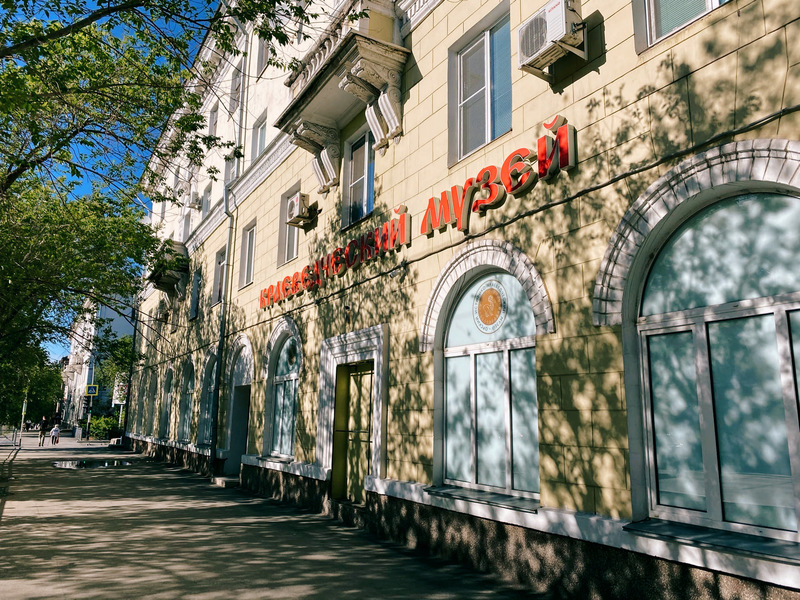
You are in the city center, on the main avenue, which is named after Lenin. It is here that the starting point of the tour is located — the Orsk Museum of Local Lore. Probably, every guest should start exploring the city from this very door. After all, it leads us into the world of mysteries and mysteries, into the world of the history of the city. Visiting the museum, you will not regret the time spent, because today it is the most modern museum in the Orenburg region. The museum began its creative life in 1939, constantly changing its place of residence. It was only in 1958 that it opened its doors to visitors at this very address. The Orsk Museum of Local Lore is an island of science. There are themed tours and exhibitions dedicated to individual historical events. The history of the city is fully reflected in its exhibitions. The first exhibitions mainly included collections of natural resources. Today, the museum has a more diverse historical and local history collection. You can plunge into the world of the past, sit in a Russian hut, visit the archaeological site, which is an imitation of a cave of a man from the Stone Age, and children can have an informative time in the play area with recreated surroundings of the daily life of the archaeological camp. The main distinguishing feature of the museum in the interactive zones is the absence of the classic prohibition "do not touch with your hands." On the contrary, everyone can not only see, but also hold in their hands the exhibits they are interested in. The Orsk Museum is a modern leisure space. And if you haven't visited it today, be sure to take the time to explore this wonder of the city later. Well, we are moving on to the Palace of Culture of Petrochemicals.
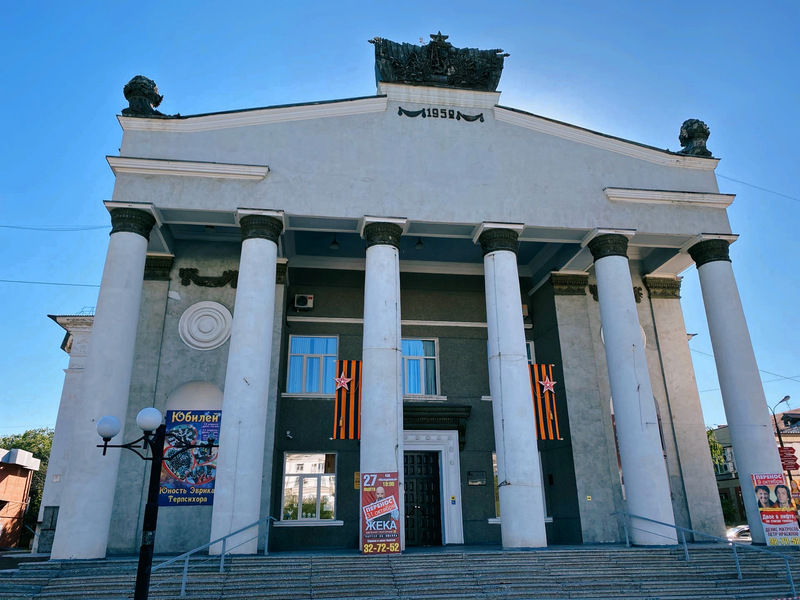
In 1952, the building was designed for employees of the plant. Chkalova, it was a business club, and for many years it was called the House of Technology. Now, it is a place of cultural leisure for all citizens. The building is a monument of urban planning of the Soviet period, it is made in the neoclassical style. If you raise your head up, you can see a composition of banners with heroic emblems, angular sculptural decorations are placed on the slopes of the pediment. But that's just the appearance. Opening the massive doors, you will plunge into the world of active creative life. Every step, every corner of this building is full of joyful emotions and vivid impressions. In the past, the palace was known for the Folk Musical Comedy Theater, whose fame boomed far beyond the city. In 1963, the theater worthily presented Orsk on the country's first stage, in the Kremlin Palace— with the operetta "Chanita's Kiss." Now it hosts most of the festive events of a citywide scale, tours by famous artists, and also hosts the Orsk KVN, known throughout Orenburg region.
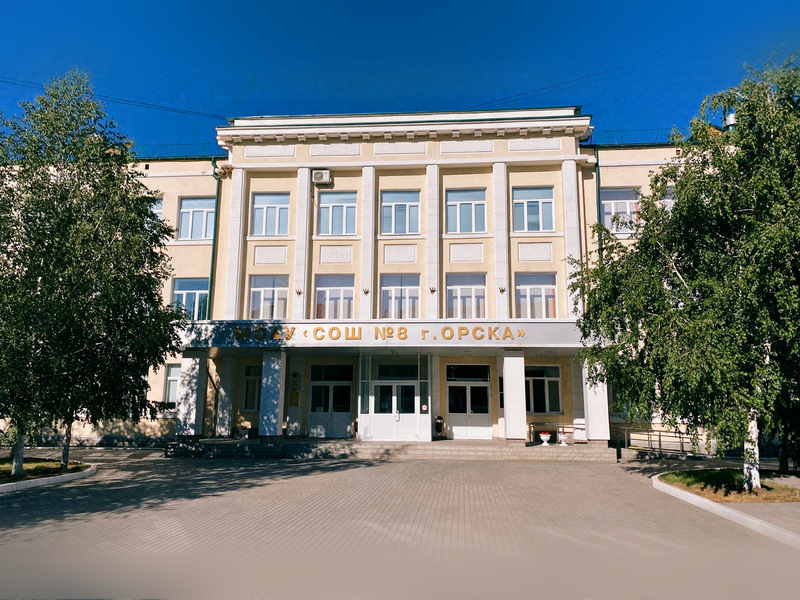
You may ask what is special about a simple school, of which there are thousands all over Russia. But this school cannot be said to be like everyone else. School No. 8 is one of the oldest educational institutions in the city. This is one of the first buildings built in the center of the future Sotsgorod, designed by Western European architects in 1935. In June 1938, the first graduation of high school students took place. There were only 11 of them. On the eve of the Great Patriotic War, in 1941, 30 people graduated from the school. The director and two teachers, along with the young graduates, voluntarily went to the front. The first director, Pyotr Ivanovich Nikolaev, and teachers Lavrenov and Sotenko died. From 1941 to 1944, the school housed a military hospital. Many students participated in the battles for their Homeland, more than 300 people did not return from the war, and over 400 were awarded government awards. In memory of those who died in the Great Patriotic War, an obelisk was erected in the courtyard of the school, where the names of students and their teachers, who remained young forever, are carved. Every school has its own glory. And her glory is in the graduates! The names of Vladimir Miguli, professor of the Yekaterinburg Conservatory, Evgeny Levitan, astronomer Efimov, writer Igor Sakhnovsky, and journalist Viktor Makarov will probably tell you a lot. They all studied here. By order of the head of the Orsk city Administration, the school building was recognized as a historically valuable environmental facility. And now we invite you to get acquainted with the architecture of the Bauhaus on Muzykalny Lane in order to plunge into the old days for a moment.
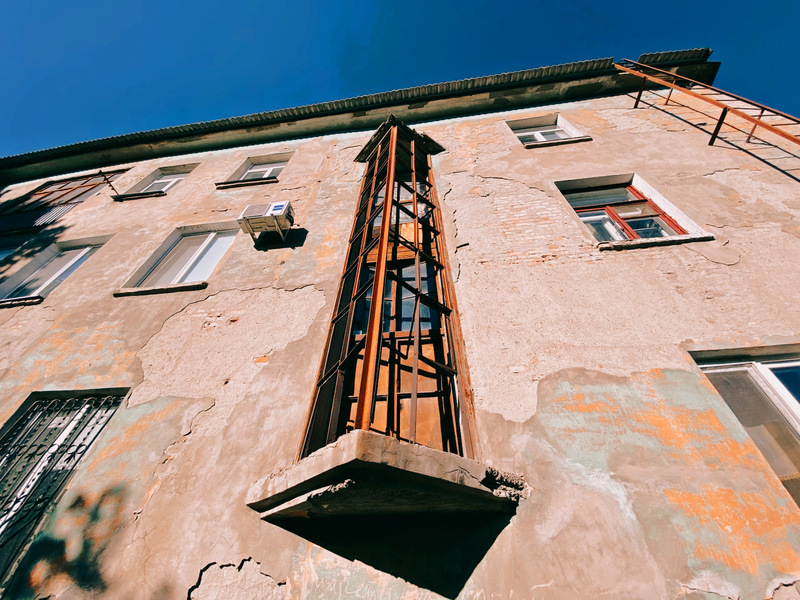
Pay attention to the building at number 4 on Musical Lane. All the houses on this street, in particular this building, are an object of the world architectural historical heritage of the German Bauhaus school. The Bauhaus school is characterized by flat roofs, large windows and unadorned architecture, simplicity and minimalism. The planning took into account local conditions: the situation in the settlement system, the features of the natural landscape and the climate. And the main feature of these buildings was the unusual glazing of the stairwells. In the three-storey houses on Muzykalny Lane, windows are equipped almost the entire length of the house. The architects tried to take into account even the smallest details, everything was functional: the walls were made thick so that no sounds penetrated, the courtyard of the house should always be in shadow, and the opposite side, on the contrary, they tried to illuminate as much as possible. Abraham van den Blok is a German architect, it was he who designed houses No. 4, 6, and 10 on Musical Lane in the late 1930s. Such are the islands of pre-war Germany in the industrial depths of Russia. In their homeland, by the way, the Germans built everything a little differently — it's enough to compare it with the working outskirts of Konigsberg. ""And contrary to popular opinion in some circles, it was during the era of Hitler and Stalin that the Soviet-German "architectural friendship" was interrupted, and after the war, the era of the "style of captured Germans" came to the Soviet Union.
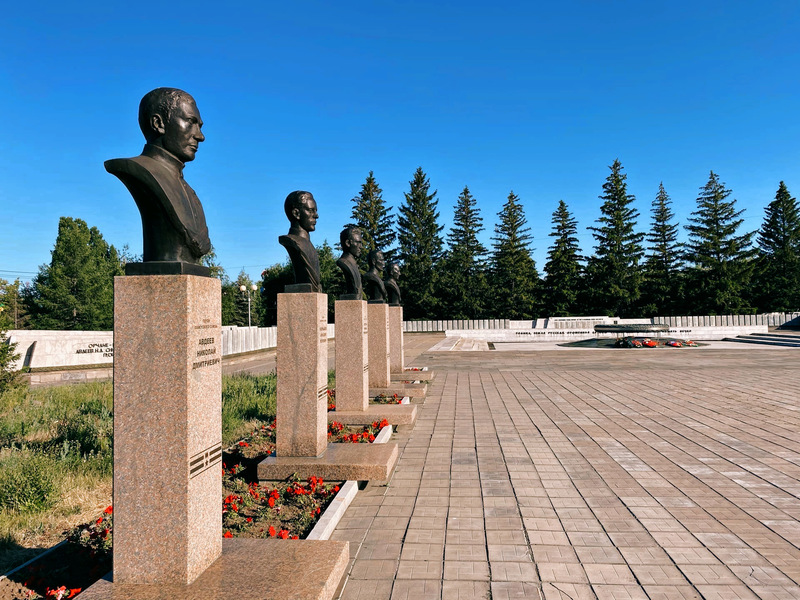
This memorable place originated in 1965. It has been 20 years since the cannonades of war were heard, and for 20 years people have been living in peace. Before the celebration on May 9, the Orsk authorities began to think about how to celebrate the second anniversary of Victory. The veterans were still young and full of energy, and they remembered well the horror that our entire vast country had gone through. But at the same time, a new generation of Soviet people was already growing up — those who had never heard air raid sirens, had not stood in line for heavy and raw military bread, and had not warmed themselves at a lukewarm stove.… The youth needed a reminder of the price the Soviet people paid for this victory. The Executive Committee of the city Council of Workers' Deputies decided to perpetuate the memory of the soldiers who died in Orsk hospitals during the war, and to reburial the remains of soldiers from all cemeteries of the city. In early April, work began on removing the remains of fallen heroes from hasty war graves. The remains of 216 soldiers fit into 12 small urns. The ashes of the heroes were transferred with all military honors to the future square of Glory. Interestingly, the locals were not warned about this: the solemn procession appeared on the street suddenly for them. Moreover, the local newspaper was silent about it too. People remembered soldiers who carried red urns with the remains of soldiers from the graves on their shoulders. Standing by the eternal flame, you can honor the memory of those who gave their lives during the war, because this is not just a memory, it is a mass grave.
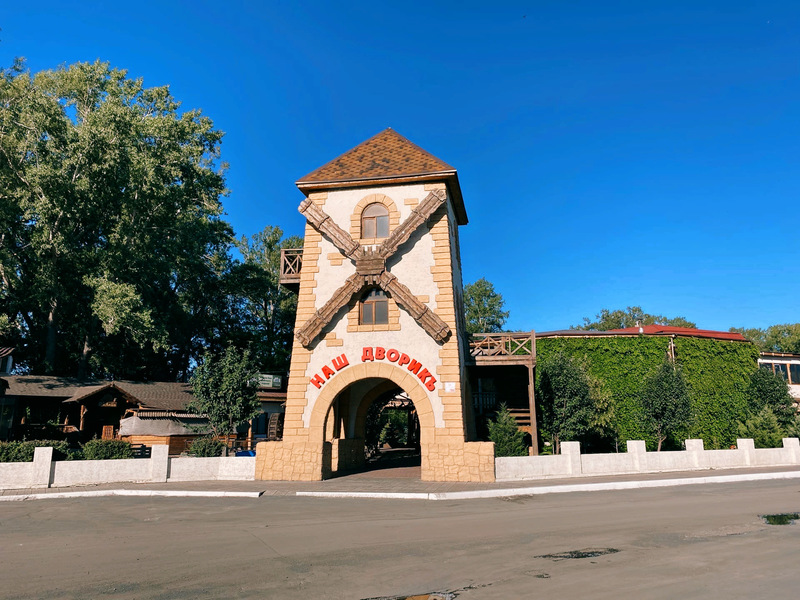
The family entertainment complex "Nash Dvorik Park" has become a kind of landmark of our city! Beautiful design in the style of a mini village. A cozy establishment in the center of Orsk, a warm welcome and a rich selection of menus are specially designed to make your stay pleasant and memorable. And for little fidgets, an active pastime area is open on the territory of the Orsky restaurant. The craft workshop became an amazing place in "Our Courtyard", and indeed in the whole of Orsk. Professional mentors will help guests with their first beginnings in pottery. None of the visitors has ever refused to create a joint family souvenir. Due to its location on the riverbank, guests can experience the beauty of nature, escape from the hustle and bustle of the city and relax in a cozy atmosphere.
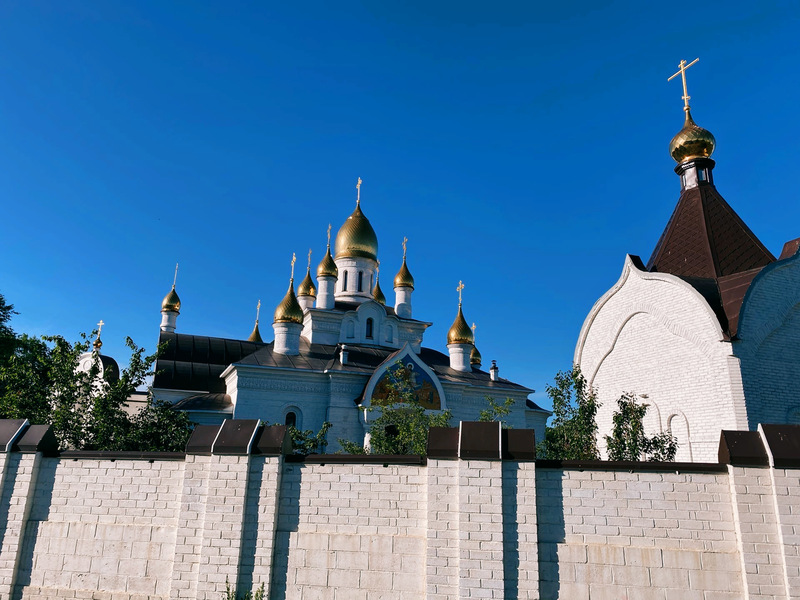
And we begin our journey to the next landmark of the city — the Cathedral of St. George the Victorious. And so that you don't get bored on the road, we will tell you about the religious buildings of the city of Orsk. There are 11 active temples in the city, the Orsk Iversky convent, a Catholic church, and the Derbisala Berkimbayev Cathedral Mosque. All religions of the resident population are covered in the city. The first Orsk church was founded in 1735, it is located in the old city (in Asia), and has undergone many natural disasters from floods to fires, changed its location, and as a result, reconstructed, it stands proudly on Mount Transfiguration! The church was named the Transfiguration of the Lord. This is a beautiful old church, which houses an Orthodox gymnasium. During the years of repression, it was closed, like all churches. In 1934, it was ordered to be dismantled. The bell tower, which remained after the dismantling, was used for a long time to install a fire brigade alarm system, and a water tank was installed inside. For 63 years, only the surviving bell tower stood on the mountain. The modern history of the revival of the ruined temple begins in the 90s of the twentieth century. The Church of the Intercession of the Blessed Virgin Mary is also located in the old town. This is the former Pokrovsky Convent, founded in 1898. Up to 120 nuns permanently resided on the territory of the monastery, and in some years even more. In 1926, the monastery was closed and used to house military units. Now it is a beautiful functioning church with a Sunday school.
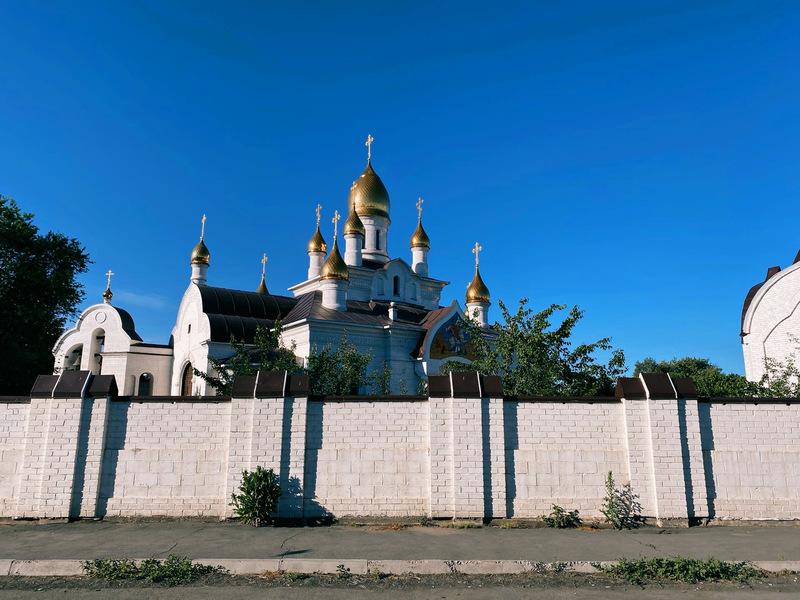
Well, here you are at the goal! Here is the Cathedral of St. George the Victorious. Tourists often refer to the Church of St. George the Great Martyr and Victorious as one of the most beautiful Orthodox cathedrals in Orsk. It is the only Orthodox church in the city center. At the end of 2001, in the area of Vasnetsov Square, where you are now, a small wooden church was built in the name of the Holy Great Martyr George the Victorious. The wooden single-domed two-altar church was built on the selfless donations of the residents of the city. It turned out to be cozy and warm at home. But the room could not accommodate all the worshippers, and they decided to reconstruct it. The construction of the cathedral began in 2008, and in 2014, after the completion of construction and finishing works, its consecration took place. At the same time, the first parishioners began to be received here. The old wooden building still adorns the Temple grounds. The style of the church building is Russian Art Nouveau. The entrance portal looks extremely festive — tall columns and above them stands St. George on horseback. Interestingly, there are not one, but two thrones here. The first was consecrated in honor of the Holy Great Martyr George the Victorious, the second in the name of St. Blessed Xenia of St. Petersburg. The interior of the church is also fascinating — the multiple icons that have been preserved for years and the amazing painting will not leave anyone indifferent.
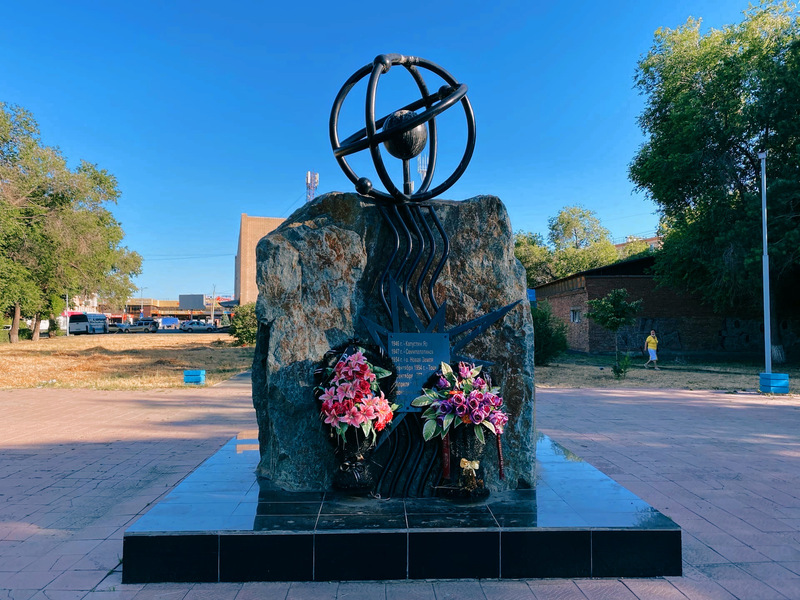
Your way to Vasnetsov Square is through a modern monument unveiled on the anniversary of the Chernobyl accident. This monument is dedicated to the residents of Orsk who suffered from radiation, and it is located behind the "Orsk" cinema. The monument itself is symbolic: a model of an atom is displayed on a huge Ural stone (a monolith of volcanic rock weighing 35 tons). Oleg Kitaev, the chief artist of the city, worked on the draft design of the memorial sign.
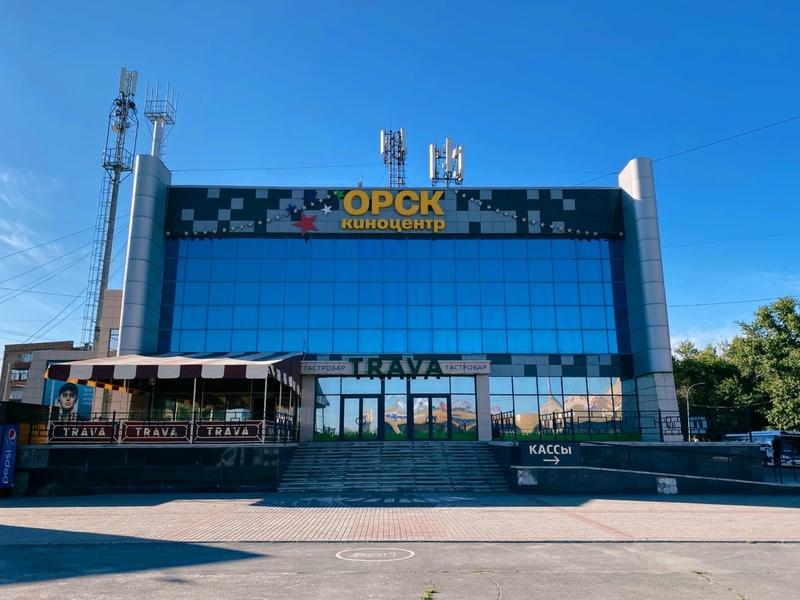
Here you are on the square, if you are looking at the "Department Store" shopping center now, then behind you is the building where the most important of the arts, cinema, lives. The "Orsk" cinema on Vasnetsov Square was opened in 1972 according to a standard design. Probably, there are such cinemas in all cities of Russia. His life was changing along with the epochal changes. In the post—Soviet period, it was redesigned: a dance floor was opened in place of the cinema hall, and a bar counter was installed in place of the buffet. A trendy and, perhaps, the most popular nightclub in the city was opened in the "Orsk" building. Fortunately, over time, everything returned to normal. They're showing movies here again now. But the building doesn't look the same as it did 40 years ago. The "Orsk" cinema Center is a popular cultural and entertainment complex for the whole family today.
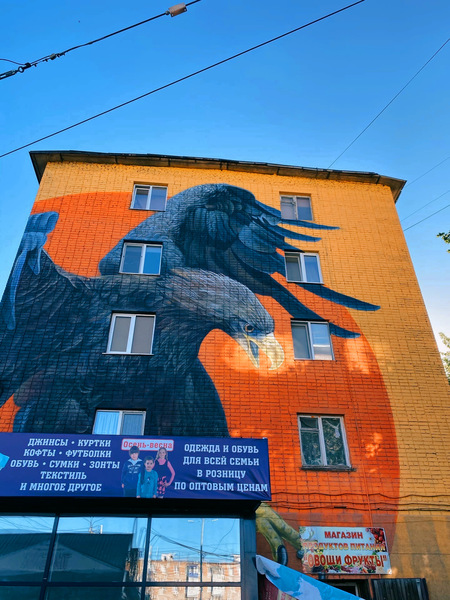
""For several years now, houses in the city have been getting brighter and more beautiful, thanks to the "Let's Paint the City" program: the Safmar charitable Foundation is engaged in facade decoration. The images of a horse and a steppe eagle on Vasnetsov Square were the first of a series of graffiti. Beautiful, bright and realistic graffiti painted Orsk in different areas. Moving around the city, graffiti paintings with images of a groundhog in tulips, children enthusiastically reading a book, a large lizard, a steam train, a dreamy girl on a swing and several landscapes will cheer you up. Orsk is becoming the brightest city in the Orenburg region, where the walls of houses have begun to sparkle with new colors.
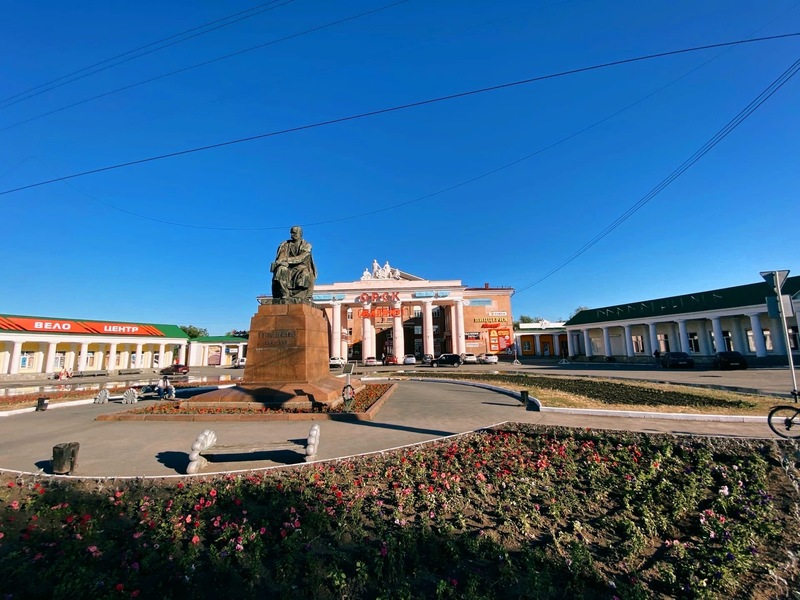
While you are on your way to the next destination of our trip, we suggest you listen to the history of the city. By the way, you will be moving along Kramatorskaya Street along residential buildings of the Brezhnev era, closer to Lenin Avenue — post-war low-rise buildings. Pay attention, because on the way you will meet the first nine-storey building of the city. With the same amazing graffiti! Well, now a bit of history. Which began in March 1734, when the famous geographer Ivan Kirillovich Kirillov developed a project about an expedition to the Kirghiz-Kaisatsky places in order to find use for state lands and build a city at the mouth of the Or River. He sent the draft to the Empress for consideration. Anna Ioannovna gave the go-ahead, and already in June, Ivan Kirillov's expedition set off from St. Petersburg to our area to found the city of Orenburg. Yes, that's right: Orenburg, not Orsk. On August 31, the city of Orenburg was laid down in a solemn ceremony with a cannon salvo. Ivan Kirillovich's dream came true. But the city, named after the Ori River, did not last long. The inconveniences of the local location affected, because of which Orenburg could not become the main city. The new ruler of the region, Vasily Nikitich Tatishchev, appointed after Kirillov's death in April 1737, insisted on transferring Orenburg to another location. In August 1739, a decree was signed stating that the city of Orenburg should be built at Krasnaya Gora, and the former Orenburg should be renamed the Orsk Fortress. Thus, the real date of birth of Orsk should be considered August 20, 1739. This is the history of the birth of our city, the date of birth of Orsk (old style) August 15, 1935. The Orsk fortress, which existed until 1861, became the place of exile of the Ukrainian poet Taras Shevchenko. It was only when the old border line was moved and a new one began to be built in the Kazakh steppe that Orsk became a village, then a city and the center of a large county. In the 20th century, the city turned into a large industrial center. The city changed over time, went through perestroika and the collapse of industrial enterprises. Then he was reborn and began to grow stronger again. ""But ""it is a pity that there are no more famous refrigerators "Orsk", factories, magnificent candies "Meteorite" and "Bird's milk". We hope that you are already approaching the next point of our tour — Shevchenko Square.
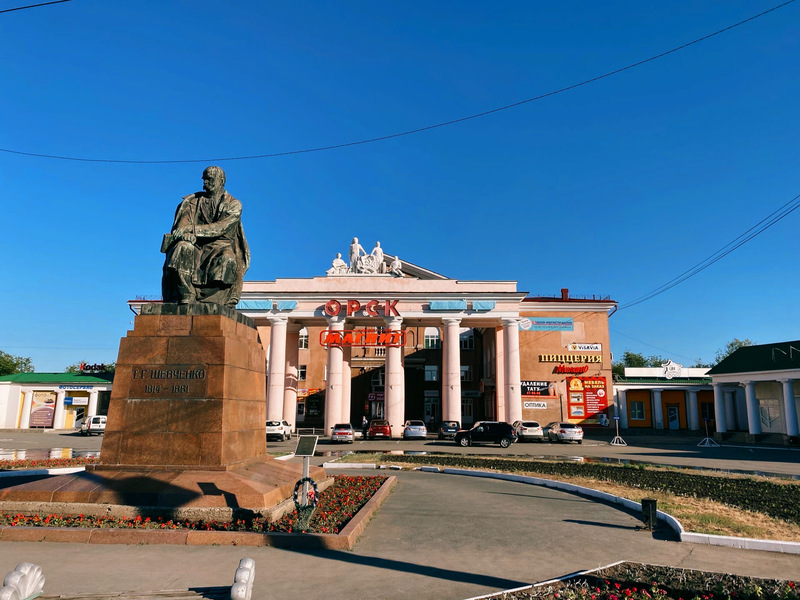
There are two interesting objects on Shevchenko Square at once — the former Palace of Culture of Machine Builders and the monument to T.G.Shevchenko. The House of Mechanical Engineers built the Yuzhuralmashzavod for its employees and their families in 1951. Massive columns, a triangular pediment, a sculptural group of four people above the entrance — all according to the standards of that time. Behind the recreation center, the machine builders have laid out an extensive park with dance floors and a summer cinema. But with the advent of modern times, the plant abandoned a huge building that required large investments, and it passed into private hands. A nightclub has been operating there for a long time, and currently many small offices and a large grocery store are open. By the way, he is known far beyond the borders of Orsk.: there are pictures of the trading floors of this "Magnet" on the Internet. Perhaps this is the only grocery store in the country, the ceiling of which is decorated with rich stucco, and the windows are illuminated by a luxurious chandelier. There is a monument to Shevchenko in the center of the square. Imagine 1847, endless grey steppes. On June 22, 1847, a wagon drove up to the Orsk fortress. The travelers sat gloomy and tired, and soon they saw a "wonderful" view of a squalid settlement with a church on top of a mountain. One of the travelers, Taras Grigorievich Shevchenko, who was exiled to our fortress, was horrified to imagine long years in prison surrounded by boundless steppe. The Ukrainian poet had a hard time in the fortress: a ban was imposed on creative activity, they forbade writing poetry and drawing. But Taras Grigorievich, despite the ban, went to the shores of the Urals or Ori and wrote. "The Princess" ""Varnak" and "Chernets", as well as many poems and other works were written by him in the Orsk fortress. If you've rested and enjoyed the view, then we're moving on. Along Lenin Avenue, we go to the Orsk drama Theater.
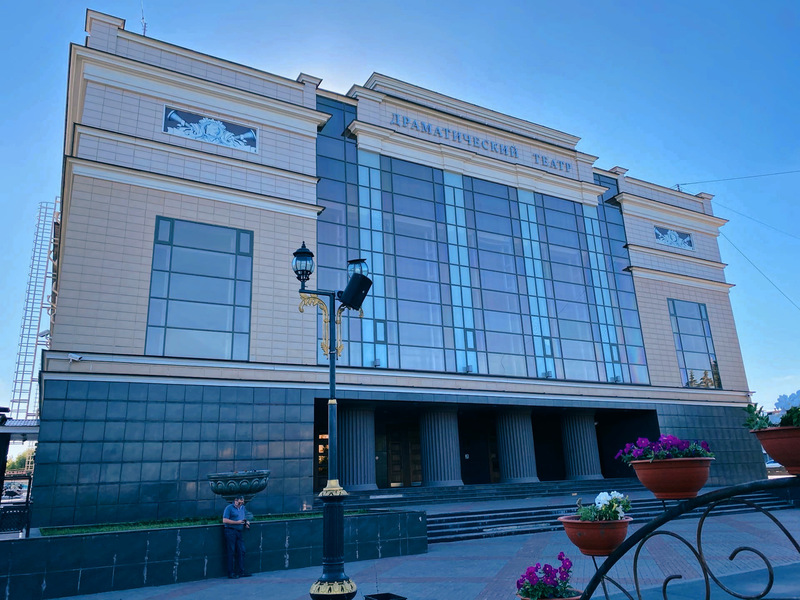
We will try to shorten this path with another legend about the city. There are many different interesting legends and stories in the city. One of them is its name. There is a "folk" version of the origin of the name of our city. ""According to this version, Orsk is an abbreviation that means "a remote area of exiled convicts" or "a remote area of exile and penal servitude." However, there was no hard labor in the fortress, since the fortress was a fortified border checkpoint. Most likely, this version refers to the Soviet period of 1960-1970, when in the 30-50s of the XX century there were many exiles and prisoners of a correctional labor camp in Orsk. But still, the toponym Orsk is not an abbreviation. If we go back to its history, it is a city on the Or River. By the way, the locals are called "orchans". Many confuse and vary the name, calling the inhabitants of the city "orchichans". Very soon you will come to the main square of the city, which is called "Komsomolskaya".
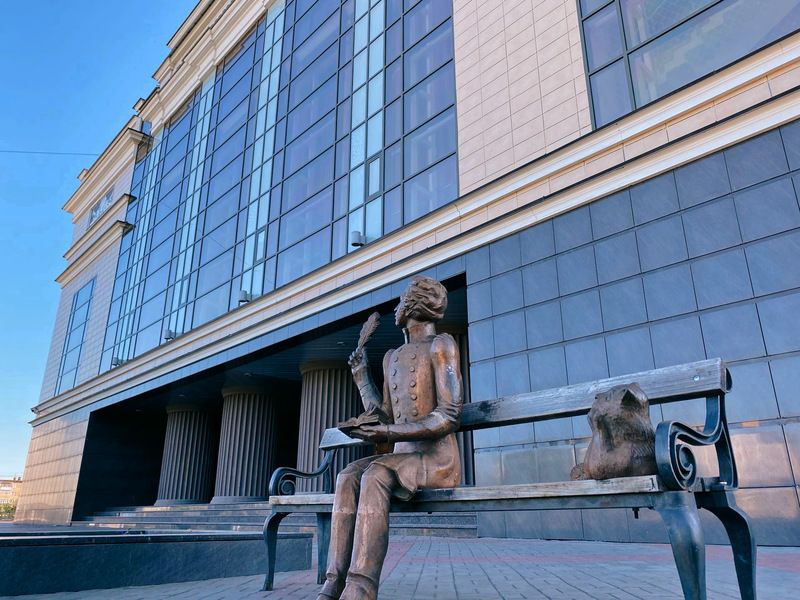
Since 1937, the drama theater named after the great Russian poet Alexander Sergeevich Pushkin has been considered the center of culture in Orsk. The first creative success of the temple of Melpomene was brought by the production of the play by K. Treneva "On the banks of the Neva". In 1969, the Pushkin Drama Theater moved to a large new building, which stood on the site of the present one. Even before the construction was completed, a large green square was laid out in front of it. For quite a long time it was the only decoration of the square. It was only in 1976 that a monument — stele was erected on Komsomolskaya Street in honor of the award of the Order of the Red Banner of Labor to Orsk (now it has been moved to the intersection of Kramatorskaya Street and Mira Avenue). At the same time, a fountain was built in front of the theater. The year 2014 gave new life not only to the theater building, but also to its equipment. During this time, the building has been transformed both inside and out. Even the old, bulky fountain has given way to a modern musical fountain that sends out colorful streams of water. Today, the building of the Orsk Pushkin Drama Theater is one of the most beautiful and most modern in the whole country, with a great interesting repertoire and a talented creative troupe. After enjoying the coolness of the fountain, you can take pictures with the unusual sculptures located along the left side of the theater! And the bench where Pushkin and the legendary cat are sitting is not far from the entrance. ""Playing saxophonist", "A man with a gramophone" — all this is fun and interesting, but one sculpture is especially attractive — this is the monument to the Orsky pie!
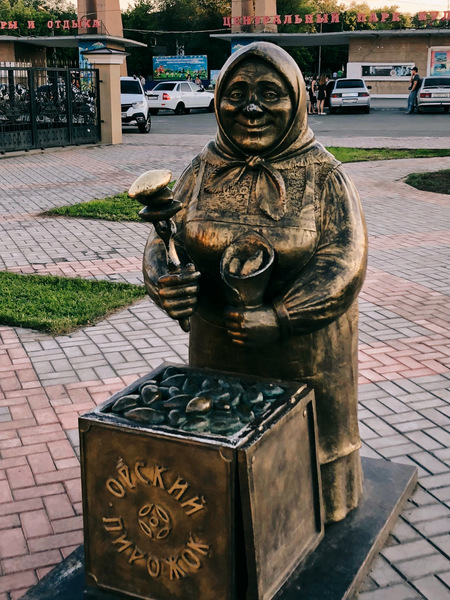
In 2015, a lovely bronze grandmother appeared near the city theater, which sells famous flour products. You will surely smile when you see this creation. But when you taste the legendary flour product, which was once produced by the Orsk meat processing plant, you will understand the delight of residents and guests of the city from this culinary miracle. Their baking has been going on since 1939, and the recipe is kept in the strictest secrecy! ""The Orchids call the pies "Starogorodsky" because the workshop for their production was located in the "old town". The main feature of the Orsky pie is that it is made from liquid dough and has a peculiar elongated shape. Its filling came from pre—revolutionary Orsk, when liver and giblets were used. Orsk pies are famous all over Russia! Elena Yurina, a participant from Orsk, brought a whole basket of them to the "Field of Miracles" program. And Grigory Leps, at his concert in Orenburg, was also presented with this wonderful product. They were transported in thermos flasks so that the pies would stay hot. They say that for his birthday, Leps ordered as many as 1,000 of them, by special flight from Orenburg! You should definitely try this symbol and the pride of the city. And also — rub the bronze pie in the old lady's hands with your hand. Don't forget to make a wish! And it will definitely come true. Thousands of Orchids and guests of the city have already checked this. Behind the drama Theater is the Central Park of Culture and Recreation named after V. Poldyanichko, where our path leads.
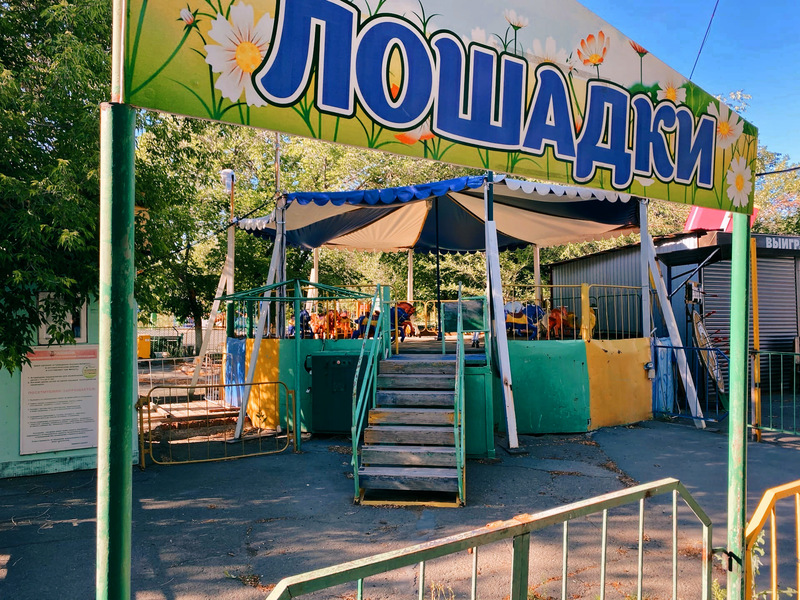
The Central Park of Culture and Recreation today is a huge complex offering a wide range of entertainment services. The pride of the park is the amusement park, which accommodates more than 20 modern attractions designed for all ages and tastes. There is a children's playground. There are halls for Russian billiards, table tennis, pneumatic and laser shooting galleries. You can play the exciting game "Paintball". Cafes, bars, and a summer restaurant are available for visitors to relax. It is here that you can sit near the fountain, listen to live music, and taste the legendary ice cream from the "Cosmos" pavilion, which we talked about at the beginning of the walk. Here you will see the retro rides that our grandparents rode when they were little! It's a horse attraction. There is also an amazing monument to the family, recently opened. Have a good rest! After all, you will have to climb to the last point of our tour — the TV tower. There is an observation deck with an incredible view of the whole city!
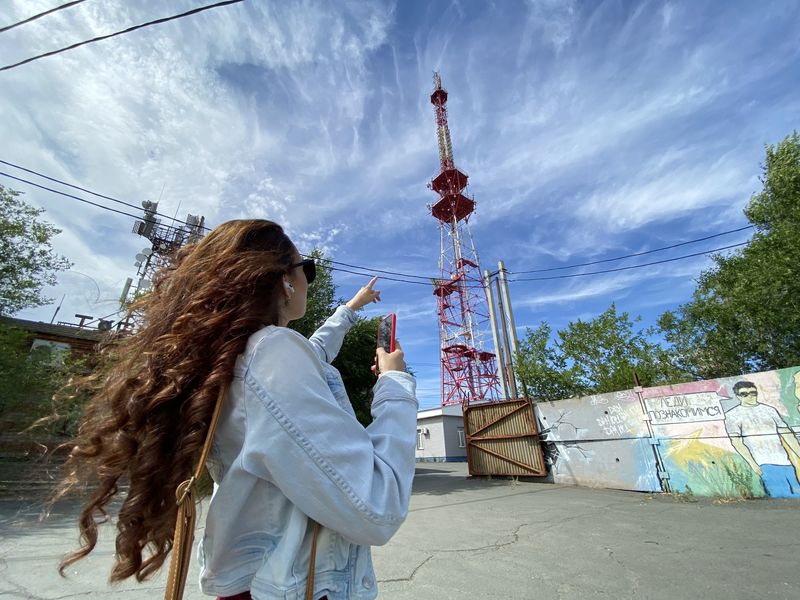
While you are climbing the mountain, we will discover several secrets of the city. Urban speleologists, not without envy, talk about the existence of a certain map of the dungeons of the entire city. However, they don't despair much even without a card. According to them, it is not difficult to detect an underground passage — it is enough to notice an air outlet or an air intake in the ground. It is said that during the construction of new buildings on the site of demolished ones in the old part of the city, builders sometimes came across passages leading nowhere. In such cases, they tried to fill them with concrete faster in order to prevent a study that could stop the construction. Although many say that, despite its antiquity, Orsk cannot boast of historical dungeons. It was impossible to build long underground passages here in the old days. There is a legend among citizens interested in the antiquity of Orsk that there is still a secret underground passage between the convent and the old cemetery. The archpriest and rector of the church Anatoly Sopiga believes in this legend and even substantiates it. He says that during the Soviet years, the military settled in the temple, the military unit "Parus" was located here, and they had a music club in the temple. And then one day the equipment disappeared from the building, although neither the door nor the windows were broken into. It means that the criminals entered the former church by another way. How? Probably through an underground passage. Believe it or not, it's everyone's right, but Anatoly Sopiga cites the fact that there is a constant wind blowing in their icon shop, as if the wind were sneaking into the room from somewhere, even though everything is locked. But this is just a legend. Nevertheless, the mystery of the team of Orsk urban and industrial speleologists is added by a variety of versions about the dungeons in the Old Town, passages on central avenues and secret tunnels. We would like to introduce you to another legend of the city. You are not just moving to the highest point of the city, where there is a TV tower and an observation deck. There is an ancient burial site next to the television center. During the rescue work, 7 mounds containing 11 burials were excavated in the burial ground, in which clay vessels, quiver sets, and objects of worship were found. The funeral rite and inventory make it possible to date the studied mounds from the 5th to the 4th centuries BC and attribute them to the Prokhorov (Early Sarmatian) culture. Anthropological studies of the remains have not been conducted, so the urban legend that there were burials of women with weapons in this area has no scientific confirmation.
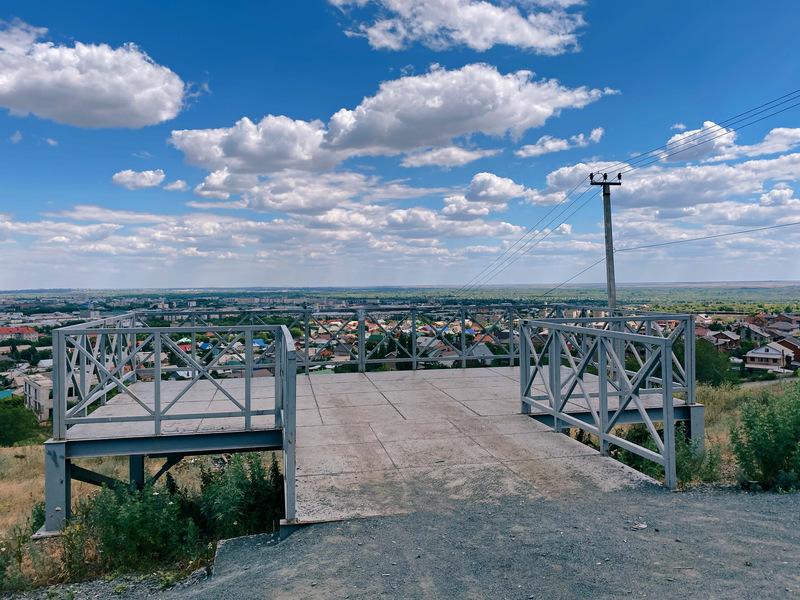
The TV tower has been a place of worship for the Orsk youth for the past decade. Almost every resident of the city has been here at least once. Not a single evening goes by that there are no visitors here. Residents are attracted here by the fact that it is practically the center of the city and it is located on the highest hill. The entire city is visible from the observation deck, including the village of OZTP and the village of A biofactory, a fair part of the city of Novotroitsk and a piece of the Orenburg highway. Every Orsk artist strives to sketch the city panorama here, school graduates come here to greet the dawn, young suitors strive to bring their lovers here in order to take advantage of the romantic atmosphere and further endear themselves to the lady of the heart. Here, at the highest point of the city, we finish the tour and tell our story about the city of labor glory, a city with a rich history. This is just a small part of the attractions that we were able to show you. We will be waiting for you on other tours of Russian cities. See you soon!