


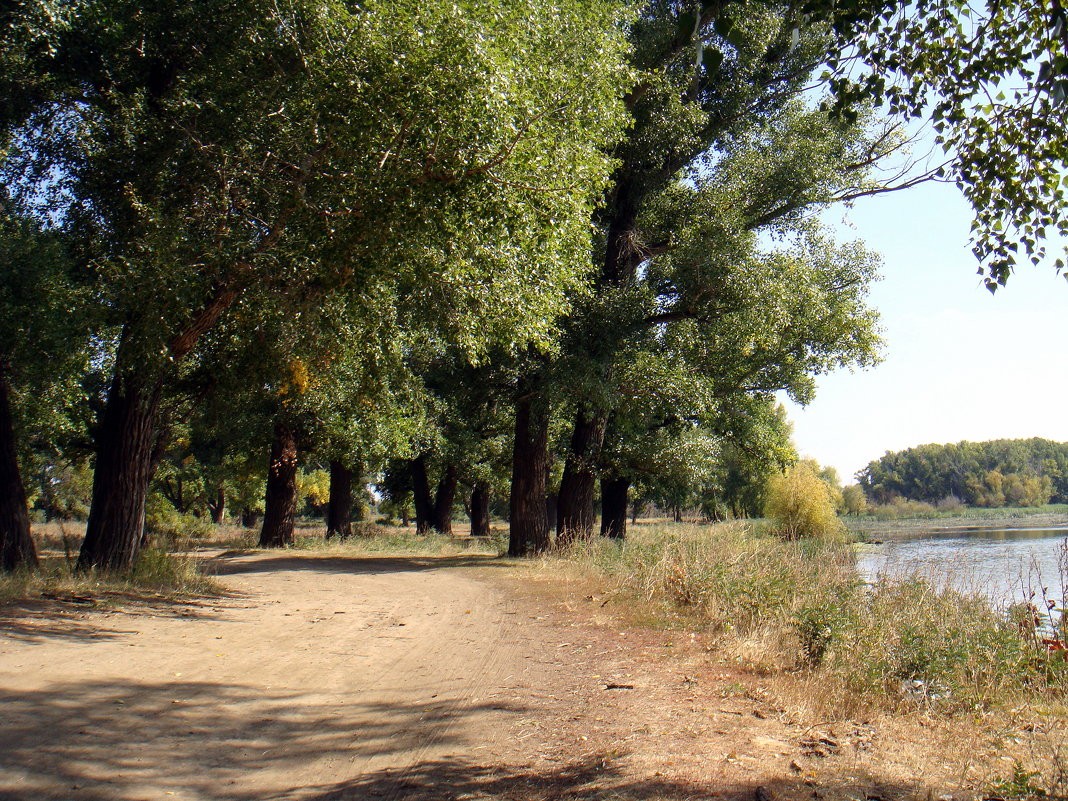
Description
Most of the park's collection is occupied by maple, and several species of poplar, oak, birch, caragana, and silver willow can also be seen here.
The Trans-Ural grove existed long before the appearance of the fortress of O., but it was, in fact, an ordinary forest.
During the construction of the city, many trees were cut down to build houses. There was little greenery in the city, and people could only escape from the summer heat and dust here, even though there was still nothing landscaped here. The governor of Essen (he arrived in our region when the city (fortress) was just over 70 years old) ordered engineer Major General Bikbulatov to put the facility in order, which was in disrepair. As a result, everything was completely reconstructed here, new trees were planted, dried-up plantings were uprooted, paths were laid out in the English manner, alleys, and a public beach was landscaped on the shore.
On weekends, a brass band played in the park, people sat in the shade of trees, turned on gramophones they had brought with them, and drank tea from samovars. Orenburg has always been multinational, from different sides you could hear songs in different languages, sung by Kyrgyz, Tatars, Bashkirs, Russians. A boat station was set up near the wooden bridge, and a boat could be rented for a fee. A ferry was built for the upper class, which was free. Ordinary citizens could also walk in the park area, but in strictly designated areas on the outskirts of the forest area.
To prevent the paths in the park from overgrown, they were sprinkled with sand every week. When Count Essen decided to leave the city, a stone gazebo was built in the grove for this occasion. There was a fountain with a beautiful sculpture inside the rotunda. After a farewell meal, according to legend, Essen departed from here. This gazebo is still standing today, but not in the Trans-Ural Grove, but in the "Lenin Garden", it was moved around 1829 or 30. Over time, a bakery, shops with dairy products, and tea pavilions appeared in the grove.
After the revolution, before the war, the Trans-Ural Grove was called "V.P. Chkalov Park." The grove was still a favorite place of the working people. Many sports grounds were built here, and various competitions and training sessions were often held. ""After the war, the city's executive committee assigned the "Zauralnaya Grove" facility the status of a "Park of local importance."
There was an attempt to create a modern recreation park in the 60s, but nothing interesting came of it. There were plans to make a TV center here, but nothing happened with it either.
In the 80s, there was a new attempt to reconstruct the grove, out of three hundred and forty hectares, only fifty were fully used. We managed to bring some of our plans to life.
A few years ago, landscaping was carried out in the grove, which began to resemble its primary condition, which was before Essen. As the years go by, the Zauralnaya Grove remains one of the favorite places of the townspeople. After the reconstruction, the Zauralnaya Grove acquired a children's race track and a new sports ground. In the summer, the park has a shooting range and children's attractions. This park is considered one of the most visited places in the city.
Read completely