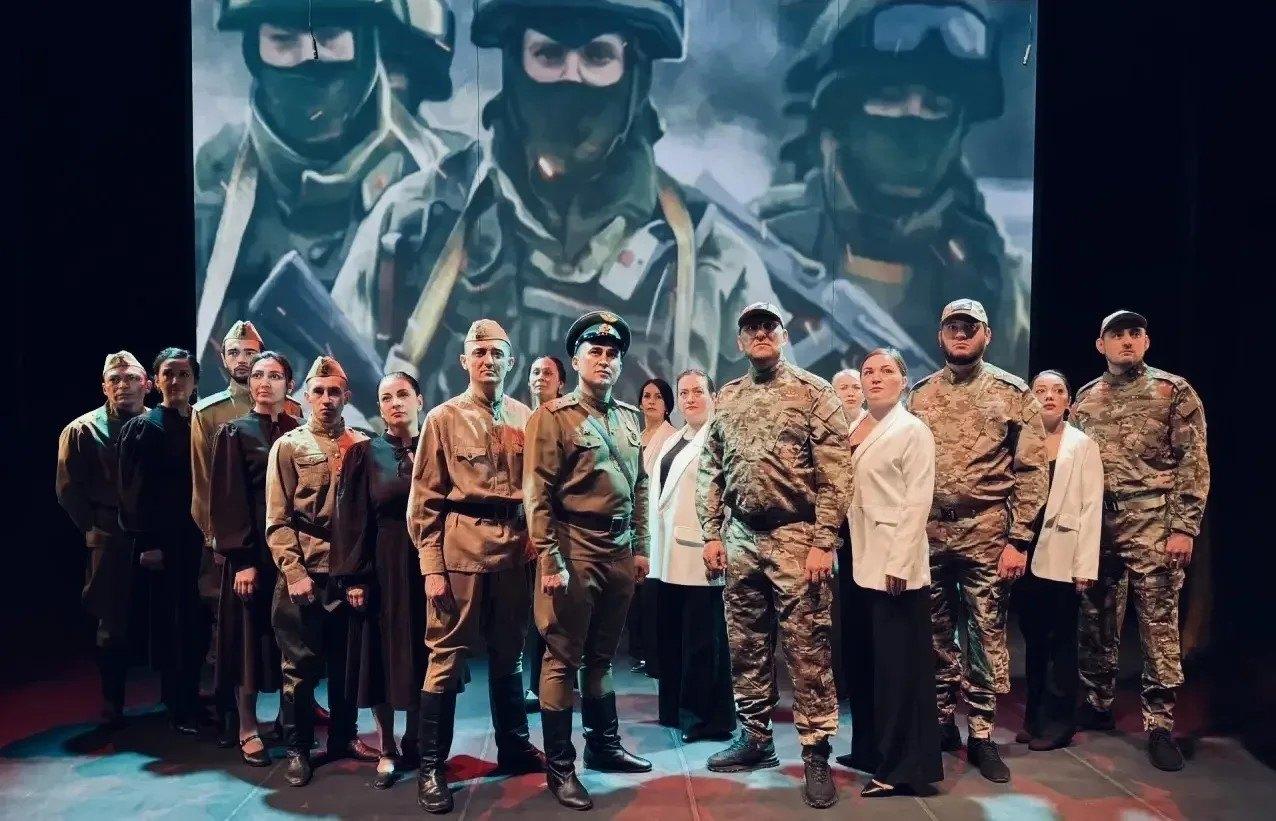
They went into immortality so that we could learn to appreciate silence. This performance is a conversation through time. A girl holding a portrait of her grandfather, a veteran, addresses him 81 years after the Victory Day Parade. But does our voice reach where the "parades have died down"? And do those who have scratched their last name on the wall of the Reichstag hear us? Here is a living history where the chronicle of the Great Patriotic War and the pain of modernity are intertwined. Poems and music, chorus and poignant monologues of soldiers – from the defenders of the Brest Fortress to the heroes of Stalingrad and the Kursk Bulge.
You will see the war through the eyes of those who cried with blue eyes and whispered to their grandchildren: "God forbid you." But time is inexorable. The play asks the main question of today: why do young "peers not care"? And what happens when fascism raises its head again, and our fathers and brothers go back to the trenches, obscuring the peaceful sky?
The production features authentic lines from letters from war children, the memories of veterans and the names of the Heroes of Russia of our time – those who, at the cost of their lives, fulfilled their duty in the 21st century. From the "Baby" tank, built with the doll money of the girl Ada, to the feat of the Orenburg Heroes of Russia. "You can't learn to love the living if you don't know how to keep the memory of the fallen alive," this phrase becomes the leitmotif of the action.
This is a warning performance and a bow performance. To the point of tears. To the point of a lump in my throat. That they survived. Are standing. And They Will Stand.